
When Does a Warehouse Outgrow Spreadsheets?
A stock spreadsheet stops reflecting reality at some point, and nobody notices when. There are a few signs that let you see that point coming.
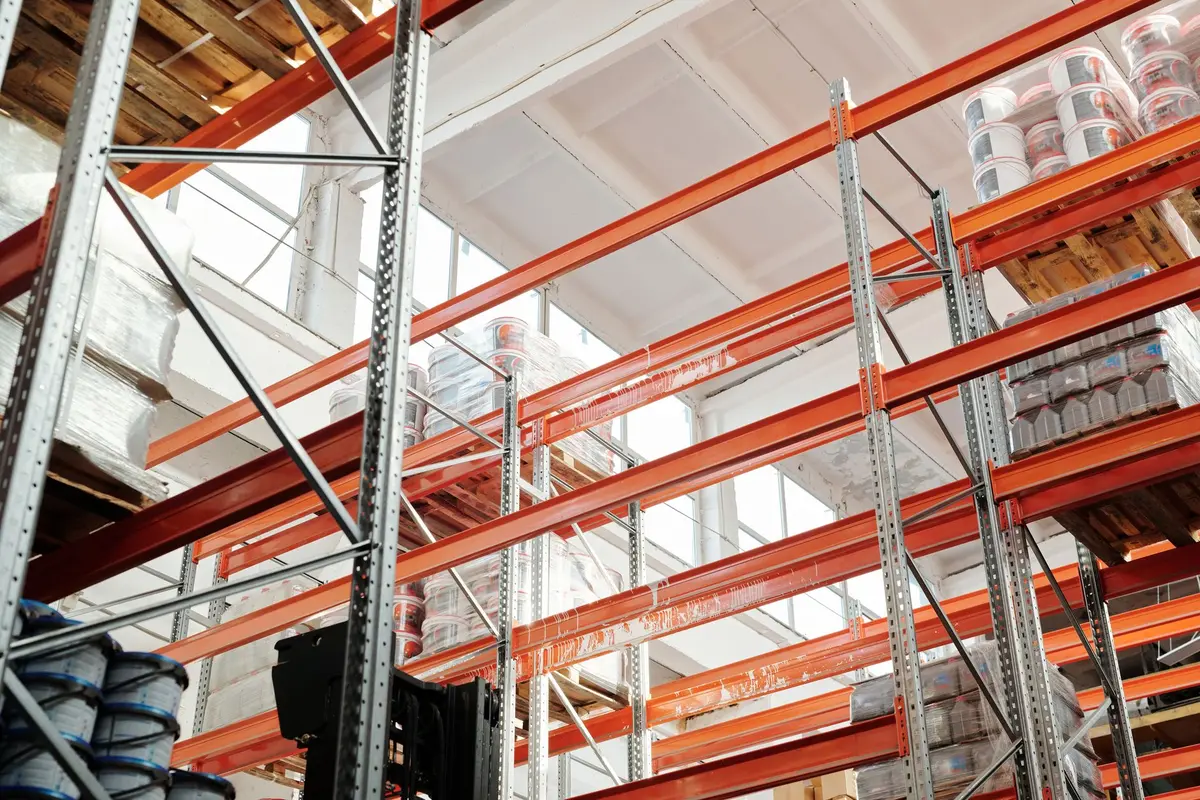
The need for warehouse software usually surfaces with a loss. A pallet nobody can find, an order sent to the wrong address, or a stock count that will not reconcile.
But that is not the moment the problem started. It started months earlier and nobody noticed. Here are the signs.
A spreadsheet is a good start
Let us say this first. If you hold few lines and one person updates the stock, a spreadsheet is more than enough. We will not recommend software, because that would just be cost you do not need.
What breaks a spreadsheet is not the number of lines, it is the number of people. The moment two people start updating the same figure, it stops telling the truth.
Sign one, the same product recorded under several names
We see this in almost every dataset we take over. The same item appears once abbreviated, once with its full name, and a third time with the brand in front.
The result is that asking how many you hold gets you three different answers. The count never reconciles and nobody knows which row is right.
This is also the longest step when moving to software. Writing the code takes days, cleaning the data takes weeks.
Sign two, nobody knows where anything is
A stock sheet usually tells you how many you have but not where they sit. In a small warehouse that is fine, because everyone carries it in their head.
That knowledge disappears the moment the warehouse grows or someone new joins. Time spent searching is the hidden cost nobody measures and everybody pays.
A system without location data does not shorten search time. That is why we walk the warehouse before we start. Where the racking sits directly shapes what the software should be.
Sign three, stocktake day stops the business
An annual count that takes two days is really an admission that the system cannot follow reality. When every movement is recorded, a count becomes a verification rather than a discovery.
Barcodes are the cheapest fix here. Anywhere data is typed by hand there are mistakes, and a scanner is the fastest way to cut the error rate during counting.
Sign four, selling what you do not have
This shows up most in businesses selling through more than one channel. The shop, the marketplace and the phone order all draw on the same stock, but the stock is not held in one place.
So you sell something you do not have. Marketplaces penalise that, and what it costs you with the customer is more expensive still.
What matters here is how the deduction happens. Checking first and deducting afterwards sells the same item twice when two orders land together. The deduction has to be a single operation.
How the move works
Not in one go, and it does not need to be. We usually start with goods in and stock movements, because an error at the receiving stage spreads through everything downstream.
Locations and racking come next. Order picking comes last, because sorting a picking list properly only makes sense once the location data has settled.
One thing we say from the start. A manual route stays open so the work does not stop when the system does. A warehouse cannot halt because the connection dropped.
Sign five, returns and shrinkage are not recorded
Most stock sheets track goods in and goods out but not returns, damaged items or things handed out as samples. They look like small numbers and the year end total is a surprise.
A return is not a sale in reverse, it is a process with its own flow. Did the goods come back, did they go into stock, and if so are they sellable? Those are three separate questions that need tracking separately.
Sign six, nobody knows who changed what
When a figure shifts unexpectedly, a spreadsheet will not tell you who did it. Even where version history exists, in practice nobody looks at it.
In a movement-based system every change produces a record and the question can be asked afterwards. That is not about finding someone to blame, it is about finding where the error started.
The warehouse screen is a different screen
This is the most common design mistake we see. A screen written for someone sitting at a desk gets put in the warehouse and nobody uses it.
The person in the warehouse is on their feet, holding a terminal or a phone, often wearing gloves. Small buttons, long forms and multi-step flows do not work there.
The same system ends up with two faces. The office side is detailed, the warehouse side has large buttons and few steps. Systems built without that split usually end up back at a paper notebook.
The question we get asked most
Will it talk to our accounting software? If that software exposes a connection, yes. If not, the transfer can be done by file.
The real decision is not technical. You have to establish which side holds the truth from the start. Does stock reality live in the warehouse system or in accounts? If both can write and there is no rule, within a few months the two drift apart and you cannot say which to trust.
Erdeniz Kurtuluş
Co-founder at Erbeon
Expertise topics related to this article