
What Changes When You Count Stock With Barcodes
Anywhere data is typed by hand there are mistakes. Barcodes are the cheapest way to cut the error rate in warehouse and counting work.
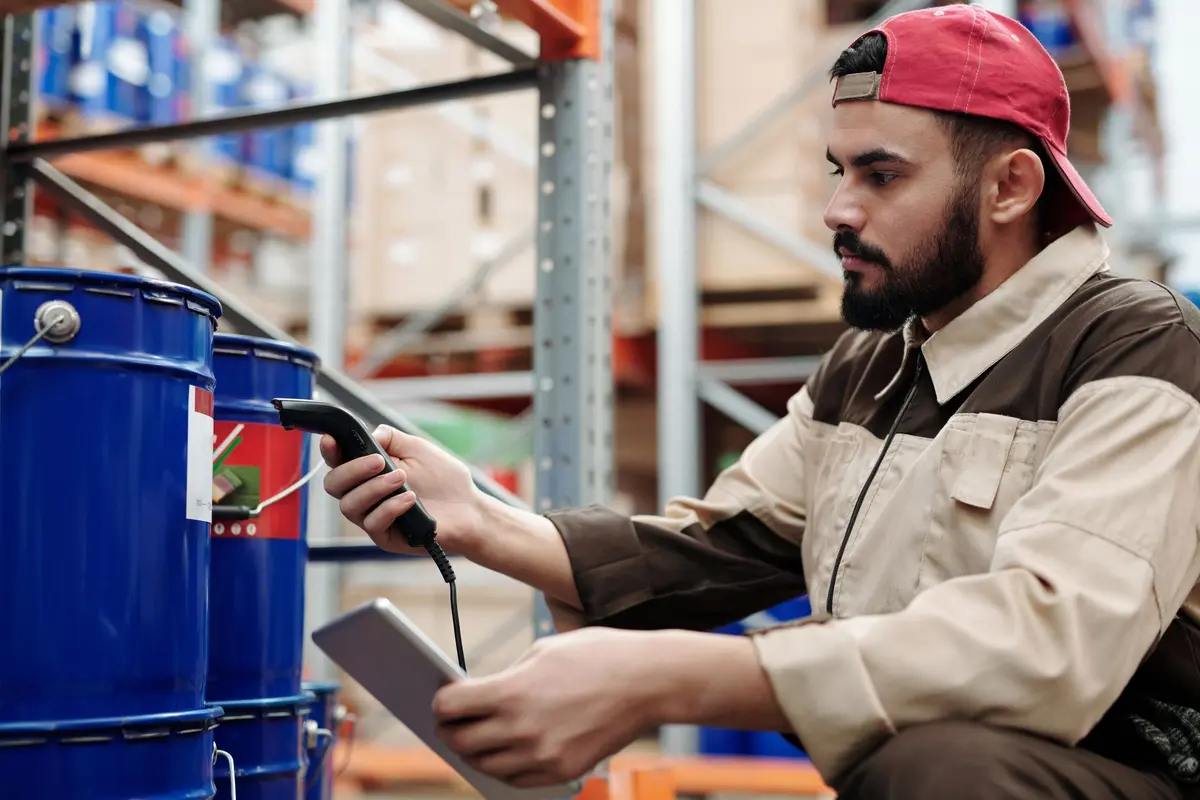
An annual stocktake that takes two days is really an admission that the system cannot follow reality. When every movement is recorded, a count becomes a verification rather than a discovery.
Barcodes are the cheapest fix here. They do not require a large investment and the effect shows up on the first count.
The real gain is accuracy, not speed
People think of speed when barcodes come up, but the real benefit is in the error rate.
Anywhere data is typed by hand there are mistakes. A digit gets dropped, two products get confused, or the same line gets entered twice. During a count the sum of those mistakes makes the count itself untrustworthy.
A scanner does not eliminate errors but it brings them close to zero. The ones that remain tend to be visible failures such as a label that will not scan, which means somebody notices.
A phone works as a scanner
This is the question we get asked most. Do we have to buy dedicated handheld terminals?
No. A phone camera reads most barcodes and is more than enough at small scale. The difference shows at volume. In a warehouse doing thousands of scans a day, a dedicated terminal is both faster and usable with gloves on.
Our advice is to start with phones. A terminal gets bought once the need is clear, and nothing changes on the software side.
There will always be labels that will not scan
Labels tear, get wet, or were never on the product. The system has to treat that as normal rather than as an exception.
A manual lookup route stays open, and that route produces a record too. Systems that close it push people back to writing notes on paper in the warehouse.
Producing your own labels
Not everything arrives with a barcode. In hardware, spare parts and loose goods especially, most items have no label at all.
In that case you produce your own. What matters here is what the code carries. It should not be meaningful, meaning no price or date embedded inside it. Those change, and the label becomes wrong.
The counting system and the stock system should be one
Using a separate counting application and then keying the result into stock is as error prone as the count itself.
Counting belongs inside the stock system. A discrepancy found during a count should produce an adjustment record, and that record should carry who made it. Then at the next count you can ask where the difference came from.
Does the business have to stop
With the classic method it does. But if counting can be done in sections, it does not.
Counting aisle by aisle or category by category avoids stopping the work and catches errors early. A rolling count beats one large annual count, because it finds differences while they are still small.
Low stock alerts
In a system counted regularly with barcodes the stock figure stays close to reality, and only then does a low stock alert mean anything.
If the figure is unreliable the alert is unreliable too. After a few false alarms the team starts ignoring notifications and the feature loses its purpose.
Where to start
With the fastest moving lines. Labelling the entire catalogue at once is not necessary and in practice is not achievable either.
We start at goods in, because an error at the receiving stage spreads through everything downstream. An item scanned correctly on the way in stays correct at every step after that.
Erdeniz Kurtuluş
Co-founder at Erbeon
Expertise topics related to this article